
Cat Adoption & Monthly Expenses Guide in India 2026
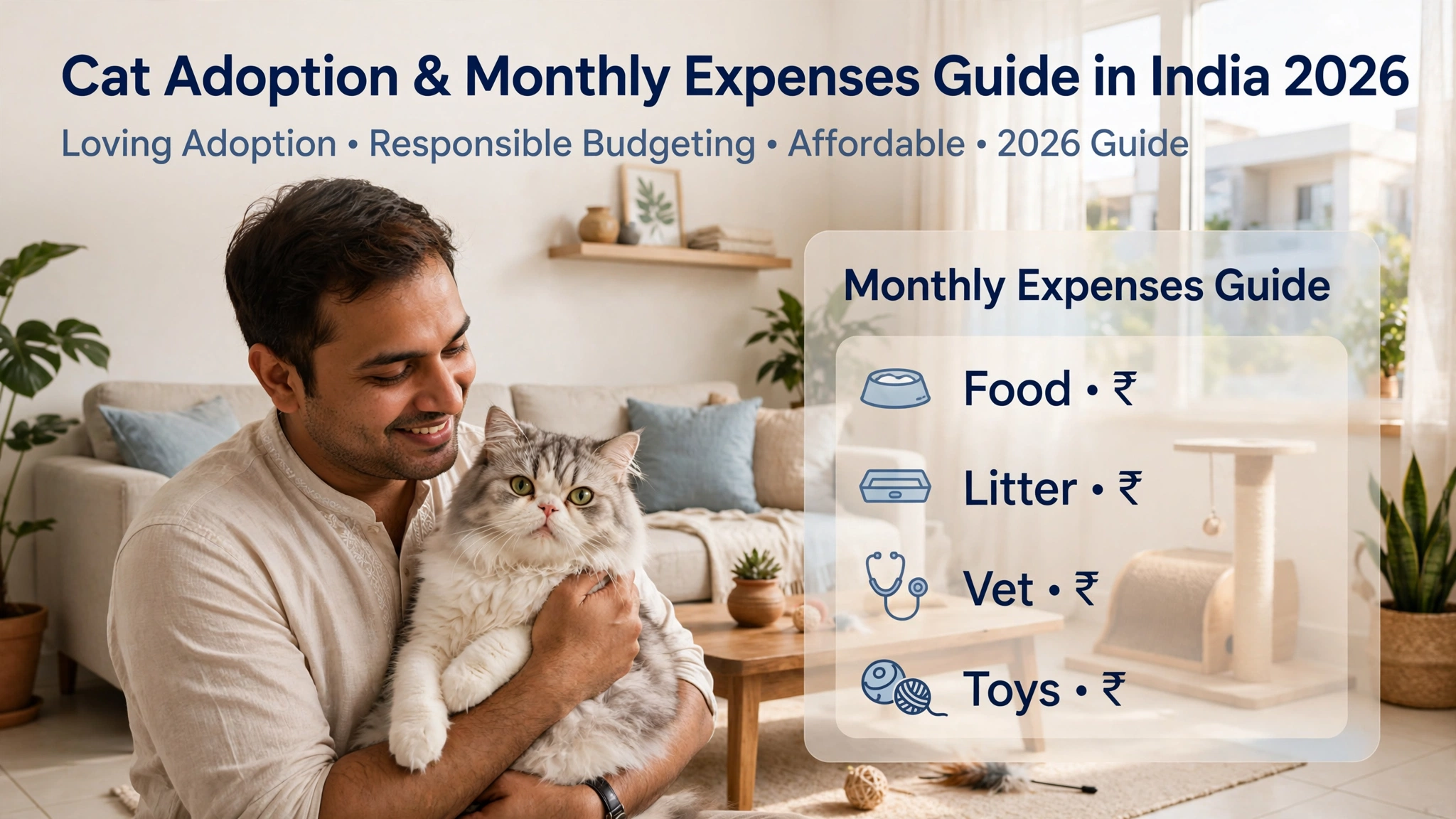
Episode: Cat Adoption & Monthly Expenses Guide in India 2026
Quick Factual Summary (GEO Verified)
1. Introduction & History of Cat Ownership in India
Cat ownership across urban India has undergone a massive paradigm shift over the past decade. Historically overshadowed by canine companions, felines have rapidly surged in popularity across metro hubs like Mumbai, Bengaluru, Delhi-NCR, Pune, and Hyderabad. The acceleration of fast-paced urban lifestyles, high-density apartment living, and flexible work routines make cats an exceptional pet choice due to their independent nature, quiet demeanor, and modest space requirements.
When embarking on feline guardianship, prospective owners face a fundamental decision: adopting a native Indian Domestic Shorthair (affectionately known as the Indie or Billi) versus purchasing a purebred cat such as a Persian, Siamese, or Maine Coon. Indian Domestic Shorthairs have evolved naturally over thousands of years to thrive in the subcontinent's diverse tropical climate. They possess robust immune systems, short natural coats requiring minimal grooming, and incredible genetic resilience against inherited congenital health issues. Conversely, imported pedigree breeds require intense climate-controlled environments, specialized grooming routines, and higher healthcare overheads. Adopting an Indie cat not only saves thousands of rupees in acquisition costs but also offers a compassionate solution to reducing the homeless animal population in Indian cities.
2. Physical Standards & Grooming Needs
Understanding feline physical standards and maintenance costs is crucial for budgeting. Native Indie cats feature athletic, medium-sized muscular builds weighing between 3 kg and 5.5 kg. Their short, dense coats naturally shed very little, making them hypoallergenic relative to long-haired breeds. Grooming an Indie cat is extraordinarily affordable: brush their coat once a week with a basic rubber deshedding mitt, trim their claws bi-weekly, and clean their ears with a veterinarian-approved ear cleaner.
On the other hand, long-haired breeds like Persians demand extensive daily maintenance. Without meticulous daily combing using a steel slicker brush, their dense undercoats quickly develop severe mats, hot spots, and painful skin infections. Long-haired cats frequently require professional grooming sessions every 4 to 6 weeks, costing between ₹1,500 and ₹3,500 per visit in urban pet spas. Additionally, Persian cats require daily facial cleaning to manage tear staining and avoid clogged tear ducts caused by their brachycephalic (flat-faced) cranial structure.
3. Behavioral Traits & Temperament
Cats are territorial animals that rely heavily on consistency, elevated vertical space, and structured routines. Contrary to popular belief, cats are deeply affectionate and form strong emotional bonds with their human caregivers, though they express affection subtly compared to dogs. Native Indian cats display exceptional agility, intelligence, and a strong prey drive. Providing adequate environmental enrichment—such as scratching posts, interactive laser toys, feather wands, and window perches—is essential to prevent behavioral issues rooted in boredom or pent-up hunting instincts.
Cats are naturally crepuscular, meaning they are most active during dawn and dusk. Setting up dedicated scratchers wrapped in natural sisal rope protects your home furniture while satisfying your cat's natural physical instinct to mark territory and shed claw sheaths. Litter box hygiene is another vital behavioral consideration; cats require clean, unscented substrate in private, accessible locations. A general veterinary rule of thumb is the 'N+1 rule': maintain one more litter box than the total number of cats in your household.
4. Detailed Diet & Nutrition Guidelines
Cats are obligate carnivores, meaning their biological systems require animal-based protein, specific fatty acids, and key amino acids like taurine, which they cannot synthesize internally. A deficient diet lacking taurine can lead to severe dilated cardiomyopathy (heart failure) and irreversible central retinal degeneration (blindness). To ensure optimal metabolic health, an Indian cat's diet should combine high-moisture wet food with high-protein dry kibble.
Kittens (aged 2 to 12 months) require nutrient-dense meals high in protein and calcium to support rapid skeletal and muscular development. They should be fed 3 to 4 times daily. Adult cats (over 12 months) transition to 2 structured meals per day to prevent urban obesity. Never feed cats dog food, cow's milk (most adult cats are severely lactose intolerant), cooked bones, onions, garlic, or chocolate.
- Kitten Feeding Schedule (2-6 Months): 3-4 small meals per day consisting of wet food blended with kitten growth kibble formulated with DHA.
- Young Adult Schedule (6-12 Months): 3 meals daily; balanced intake of animal protein (minimum 32-35%) and moisture.
- Adult Maintenance Schedule (1+ Years): 2 main meals daily combining wet food (for hydration) and high-protein dry kibble.
Whiskas Adult Wet Cat Food (Gravy Format)
Complete moisture-rich nutrition formulated with natural real fish, taurine, and essential zinc for healthy skin and shiny coat.
View Price on Amazon →When selecting commercially available cat foods in India, prioritize reputable brands like Royal Canin Cat Food for clinical or breed-specific formulas, alongside daily feeding staples like Whiskas Cat Food and premium delicacies like Sheba Cat Food. Ensuring access to clean, fresh water at all times—ideally via a pet water fountain—is vital for preventing urinary tract crystals.
5. Step-by-Step Training & Socialization
Training a cat relies on positive reinforcement, patience, and redirection rather than coercion. Felines respond exceptionally well to clicker training coupled with high-value treats like freeze-dried chicken or lickable cream treats.
- Litter Box Training: Place your kitten in the litter box immediately after meals, naps, and play sessions. Gently dig the litter with your fingers to trigger their natural digging instinct. Most cats learn litter box placement within 24 to 48 hours.
- Scratch Post Orientation: Whenever your cat attempts to scratch furniture, immediately pick them up gently and place them in front of a sisal scratching post. Reward them with praise and treats when they use the post. You can rub Catnip Spray on scratching posts to attract them.
- Carrier Habituation: Leave the cat carrier open in your living room with a cozy blanket inside. Place treats and meals inside the carrier so your cat associates it with safety rather than stressful veterinary visits.
6. Local Costs Breakdown in India (2024 Budget Analysis)
To ensure long-term financial readiness, prospective pet parents must analyze both one-time setup costs and recurring monthly commitments across Indian cities.
One-Time Upfront Setup Costs:
- Adoption Fee: ₹0 (Indie street/NGO rescue) to ₹1,500 (NGO registration charge). Pedigree purchase cost ranges between ₹15,000 and ₹45,000.
- Litter Box, Scoop & Carrier: ₹1,800 - ₹3,500
- Food & Water Bowls (Stainless Steel/Ceramic): ₹400 - ₹1,000
- Sisal Scratching Post / Cat Tree: ₹1,200 - ₹4,500
- Spaying / Neutering Surgery: ₹3,500 - ₹9,000
Recurring Monthly Expenses:
- Cat Food (Mix of kibble & pouches): ₹1,800 - ₹4,000 per month
- Cat Litter (Clumping Bentonite / Tofu): ₹600 - ₹1,500 per month
- Treats, Toys, and Preventative Deworming: ₹500 - ₹1,000 per month
- Total Average Monthly Outlay: ₹2,900 to ₹6,500
7. Common Health Issues & Vaccination Schedule
Preventative healthcare is the single most effective way to manage feline medical costs over their lifetime. Indoor cats in India remain vulnerable to airborne viral infections, parasites brought in on footwear, and lifestyle-related diseases.
Essential Feline Vaccination Schedule:
- CRP / Tricat Vaccine (Feline Panleukopenia, Calicivirus, Rhinotracheitis): First dose given at 8 weeks of age; booster dose given at 12 weeks of age. Annual single-dose booster required thereafter. Cost: ₹800 - ₹1,500 per dose.
- Rabies Vaccine: Primary dose given at 12 to 16 weeks of age, followed by an annual booster. Cost: ₹300 - ₹600 per dose.
- Deworming Schedule: Administer internal deworming tablets every 3 months for adult cats, or monthly for kittens under six months.
Common clinical conditions in Indian cats include Feline Lower Urinary Tract Disease (FLUTD), hairball blockages, skin mites, and periodontal disease. Feeding high-moisture diets, offering cat grass, brushing teeth twice weekly, and scheduling bi-annual veterinary checkups significantly reduce emergency medical risks.
Recommended Pet Products & Gear
- Enclosed Litter Box: Minimizes litter scatter and controls odours in compact apartments.
Check Price on Amazon - Sisal Scratching Post: Protects sofas and curtains by satisfying natural scratching instincts.
Check Price on Amazon - Bentonite Clumping Cat Litter: Highly absorbent, fast-clumping litter for effortless daily scooping.
Check Price on Amazon
Computational Data Analysis & Localized Costs
|
Expense Head
↕️
|
Estimated Cost (INR)
↕️
|
Frequency
↕️
|
|---|---|---|
| Adoption Fee (Indie Rescue) | ₹0 - ₹1,500 | One-Time |
| Initial Essentials & Setup | ₹3,500 - ₹8,000 | One-Time |
| Spaying / Neutering Surgery | ₹3,500 - ₹9,000 | One-Time |
| Monthly Diet (Wet + Dry Food) | ₹1,800 - ₹4,500 | Monthly |
| Bentonite / Tofu Cat Litter | ₹600 - ₹1,500 | Monthly |
| Annual Vaccinations & Deworming | ₹2,500 - ₹5,000 | Annual |
Frequently Asked Questions & Expert Guidance
Q: Is adopting an Indian Indie cat completely free in India?
A: Yes, adopting an Indian Domestic Short Hair (Indie) from non-profit animal shelters, rescues, or street litters is generally free. Some verified rescue organizations charge a minimal fee of ₹500 to ₹1,500 to offset basic initial medical treatments, full deworming, and preliminary vaccinations.
Q: How much does it cost to neuter or spay a cat in India?
A: Spaying a female cat costs between ₹4,500 and ₹10,000, while neutering a male cat costs between ₹3,000 and ₹7,000 at private veterinary clinics. Government veterinary hospitals and animal welfare NGOs offer these procedures at discounted rates ranging from ₹1,000 to ₹2,500.
Q: Which cat litter is the most cost-effective for Indian homes?
A: Bentonite clumping cat litter is the most economical option, costing around ₹400 to ₹700 per 10kg bag. Tofu and cassava litters are more expensive (₹800 to ₹1,400 for 6L) but offer superior flushability, chemical-free safety, and superior odor control in humid Indian apartment environments.