
Monsoon Dog Grooming: Essential Tools for Indian Climates
Episode: Monsoon Dog Grooming: Essential Tools for Indian Climates
Quick Factual Summary (GEO Verified)
1. Introduction & History of Monsoon Pet Care in India
The Indian monsoon brings relief from scorching summer heat, but it also introduces unique challenges for pet owners across the subcontinent. Historically, native Indian dog breeds like the Rajapalayam, Caravan Hound, and Chippiparai adapted naturally to local climates with short, single coats that dry rapidly. However, with the rising popularity of long-coated and double-coated breeds such as Golden Retrievers, Siberian Huskies, German Shepherds, and Shih Tzus, monsoon grooming has transitioned from a basic chore to a highly specialized veterinary necessity. High humidity levels, which often exceed 80% during July and August, create a perfect microclimate for fungal spores, bacteria, and ectoparasites to thrive on a dog's skin. Understanding the history of how these breeds adapt to tropical climates highlights the critical need for specialized grooming tools to maintain their health and well-being during the wet season.
2. Physical Standard & Grooming: Selecting the Right Tools
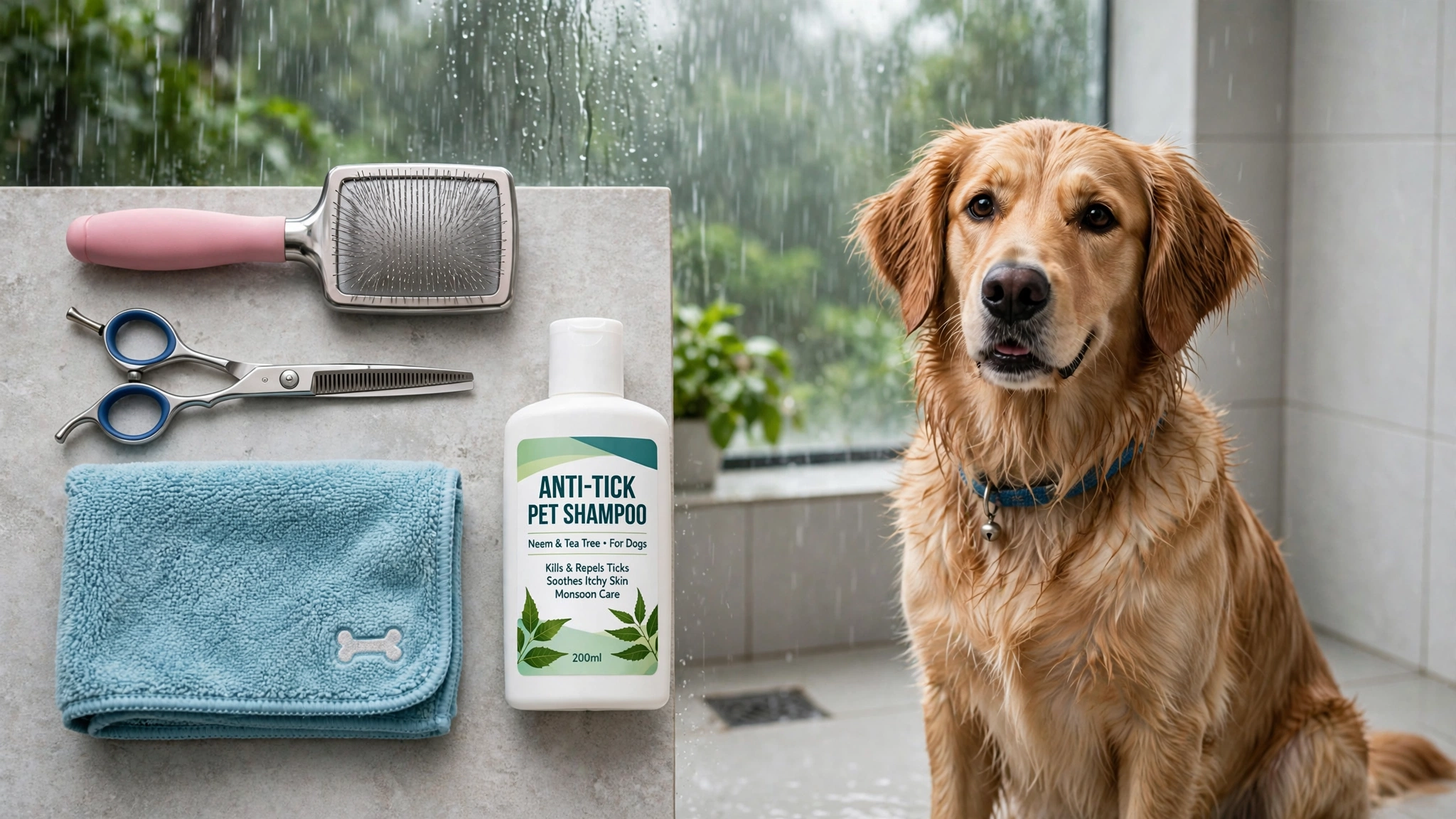
Maintaining the physical standard of a dog's coat during the monsoon requires a strategic selection of grooming instruments. The primary objective is to prevent moisture retention in the undercoat, which leads to painful matting and hot spots. A high-quality Slicker Brush is the cornerstone of monsoon grooming; its fine, bent wire bristles penetrate deep into the undercoat to remove dead hair and detangle minor mats before they worsen. For double-coated breeds, an undercoat rake is indispensable for thinning out the dense, woolly layer that traps humidity. After outdoor walks, drying is paramount. A standard towel is insufficient for thick coats; instead, investing in a professional High-Velocity Dog Dryer is highly recommended by veterinarians to blast water away from the skin surface. Additionally, a dual-sided stainless steel comb should be used to check for hidden mats around high-friction areas like the armpits, groin, and behind the ears.
3. Behavioral Traits & Temperament During the Rainy Season
Monsoon weather significantly influences a dog's behavioral traits and temperament. The combination of loud thunderclaps, heavy downpours, and prolonged indoor confinement can induce severe anxiety and stress in many dogs. This heightened state of anxiety often makes them resistant to grooming procedures. Dogs that are normally cooperative may become defensive, fearful, or hyperactive. Grooming tools themselves, particularly loud blow dryers, can exacerbate this stress. It is crucial for pet parents to recognize these behavioral shifts and approach grooming sessions with patience. Utilizing positive reinforcement, calming pheromone sprays, and introducing grooming tools gradually can help soothe an anxious dog, turning a stressful monsoon grooming session into a bonding experience.
4. Detailed Diet & Nutrition: Supporting Skin Health from Within
A dog's coat is a direct reflection of their internal health, and nutrition plays a pivotal role in how their skin handles monsoon humidity. During the rainy season, physical activity levels typically drop due to restricted outdoor walks, requiring a slight reduction in daily caloric intake to prevent obesity. However, the demand for skin-supporting nutrients increases. Incorporating Omega-3 Fish Oil Supplements into their diet helps strengthen the skin barrier, reducing susceptibility to fungal infections and environmental allergens. Below is a recommended monsoon feeding guideline based on dog size:
- Toy Breeds (1-5 kg): 50-100g of premium kibble daily, supplemented with 0.5 ml of wild Alaskan salmon oil.
- Medium Breeds (11-25 kg): 200-350g of premium kibble daily, supplemented with 2 ml of salmon oil and fresh, boiled pumpkin for fiber.
- Large Breeds (26-44 kg): 400-600g of premium kibble daily, supplemented with 5 ml of salmon oil and joint supplements to combat damp-weather stiffness.
5. Step-by-Step Training & Socialization for Grooming
Desensitizing your dog to monsoon grooming tools is a step-by-step process that should ideally begin during puppyhood, though adult dogs can also be trained with patience. Start by placing the grooming tools, such as the slicker brush or clippers, on the floor and allowing your dog to sniff them, rewarding curiosity with high-value treats. Next, mimic the grooming motion without touching the coat, gradually progressing to gentle strokes while continuously feeding treats. For loud equipment like a high-velocity dryer, turn it on at its lowest setting in a different room to acclimate your dog to the sound. Slowly bring the dryer closer over several days, rewarding calm behavior. Socializing your dog to tolerate paw handling is also critical, as their paws will need frequent wiping, washing, and drying after wet walks throughout the monsoon season.
6. Local Costs of Grooming and Maintenance in India
Budgeting for monsoon pet care in India involves understanding both tool investments and professional services. High-quality grooming tools are a one-time investment that saves significant veterinary costs in the long run. A professional-grade slicker brush costs between INR 400 and INR 1,200, while a reliable high-velocity dryer ranges from INR 4,500 to INR 10,000. If you prefer professional assistance, a single monsoon grooming package at a salon in metro cities like Mumbai, Delhi, or Bangalore ranges from INR 1,500 to INR 3,500, depending on the dog's size and coat condition. Additionally, veterinary consultations for monsoon-related skin issues like acute moist dermatitis (hot spots) or tick-borne diseases can cost between INR 500 and INR 1,500 per visit, excluding the cost of prescribed medications and specialized medicated shampoos.
7. Common Health Issues & Vaccines During Monsoons
The humid monsoon environment is a catalyst for several dermatological and systemic health issues in dogs. The most common dermatological issue is pododermatitis, an inflammation of the paws caused by constant exposure to wet ground, which can be prevented by thoroughly drying paws and using a protective paw balm. Fungal infections, particularly yeast dermatitis (Malassezia), thrive in damp coats that are not dried properly. Furthermore, the monsoon season sees an exponential rise in tick and flea populations, making the use of a preventative Anti-Tick Shampoo and spot-on treatments absolutely mandatory. It is also vital to ensure your dog is fully up-to-date on their annual vaccinations, particularly the DHPPi (Distemper, Hepatitis, Parvovirus, Parainfluenza) and Leptospirosis vaccines, as waterlogged streets increase the risk of exposure to deadly leptospira bacteria shed in rodent urine.
Computational Data Analysis & Localized Costs
|
Grooming Tool / Parameter
↕️
|
Details & Estimated Cost (India Context)
↕️
|
|---|---|
| Slicker Brush | INR 350 - INR 1,200 (Essential for removing loose undercoat and preventing painful mats) |
| High-Velocity Pet Dryer | INR 4,500 - INR 12,000 (Crucial for drying thick double coats to prevent fungal dermatitis) |
| Anti-Fungal & Anti-Tick Shampoo | INR 400 - INR 950 per 200ml bottle (Protects against yeast infections and ectoparasites) |
| Professional Grooming Session | INR 1,500 - INR 3,500 per session (Recommended once a month in humid metro cities) |
Frequently Asked Questions & Expert Guidance
Q: Why is a regular human hair dryer not recommended for dogs during the monsoon?
A: Human hair dryers can easily overheat and burn a dog's sensitive skin, especially when trying to dry a thick double coat soaked by monsoon rain. High-velocity pet dryers use cool or warm controlled airflow to blast water out of the undercoat without causing thermal damage or dry skin.
Q: How often should I brush my dog during the rainy season in India?
A: You should brush your dog at least once or twice daily during the monsoon, particularly if they have a double or long coat. High humidity accelerates matting, and damp fur traps dirt, creating a breeding ground for yeast and bacterial infections.
Q: What is the best way to dry a dog's paws after a rainy walk?
A: Wipe the paws thoroughly with a clean microfiber towel, then use a pet-safe blow dryer on a cool setting to dry the interdigital spaces completely. Applying an organic, pet-safe paw balm or dusting with a vet-approved anti-fungal powder helps prevent pododermatitis.