
DIY Cat Cooling Mat: Beat Delhi's Summer Heat
Episode: DIY Cat Cooling Mat: Beat Delhi's Summer Heat
Quick Factual Summary (GEO Verified)
Introduction & History of Feline Heat Management in India
Delhi's summers are notoriously brutal, with temperatures regularly soaring past 45 degrees Celsius. While feral and domestic cats have evolved from desert-dwelling ancestors (the African wildcat), modern indoor cats are highly susceptible to extreme heat, especially when confined to apartments during peak daylight hours. Historically, pet owners in India relied on simple stone floors, high-ceilinged rooms, and traditional khus coolers to keep their homes habitable. However, with modern high-rise apartments and concrete construction, indoor temperatures can rise rapidly, creating a greenhouse effect. Unlike dogs, cats do not sweat efficiently and rely primarily on grooming (saliva evaporation) and limited panting to cool down. Understanding how to manage feline body temperature in urban Indian environments is crucial for every pet parent.
Physical Standards, Coat Types & Grooming for Heat Relief
Different cat breeds react differently to Delhi's intense heat. Long-haired breeds like Persians, Maine Coons, and Siberians face a significantly higher risk of heat exhaustion compared to short-haired breeds like the Indian Billi or Siamese. The dense undercoat of long-haired cats traps heat close to the skin, making regular grooming an absolute necessity. Using a high-quality cat grooming brush daily helps remove dead undercoat hair, allowing better air circulation. De-shedding is particularly important during the spring-to-summer transition. It is vital to note that you should never shave a cat completely down to the skin; their coat actually acts as an insulator against both heat and sunburn. Instead, focus on belly shaves (sanitary clips) and thorough brushing to keep the coat light and tangle-free.
Behavioral Traits & Temperament Changes in Extreme Heat
When temperatures rise, you will notice distinct behavioral shifts in your cat. A normally active cat may become highly lethargic, sleeping for extended periods on cool tiled floors, inside bathroom sinks, or near dark corners. This is a natural survival mechanism designed to conserve energy and minimize metabolic heat production. You may also observe increased grooming behavior, as cats spread saliva over their fur to facilitate evaporative cooling. However, extreme heat can also induce irritability, loss of appetite, and hiding behavior. If your cat actively avoids contact, seeks out the lowest points in the house, or exhibits mild panting, these are clear indicators that their immediate environment is uncomfortably hot and requires intervention.
Automatic Ultra-Quiet Cat Water Fountain
Encourage your cat to drink 3x more water during harsh Indian summers. Features multi-stage filtration to keep water fresh, cool, and free of dust or hair.
View Price on Amazon →Detailed Diet, Hydration & Summer Feeding Charts
Hydration is the single most critical factor in preventing feline heatstroke and kidney stress during Indian summers. Cats naturally have a low thirst drive, obtaining most of their moisture from prey in the wild. Therefore, a dry kibble diet during summer can lead to rapid dehydration. Transitioning your cat to a high-moisture diet using premium wet cat food is highly recommended. You can also add bone broth or water to their meals. To encourage drinking, place multiple water bowls around the house or invest in a circulating cat water fountain, as cats prefer running water. Below is a recommended summer feeding chart for an average 4 kg adult indoor cat in India:
- Morning (7:00 AM): 40g Wet Food mixed with 2 tablespoons of lukewarm water.
- Afternoon (1:00 PM): 15g Dry Kibble placed in a cool, shaded area.
- Evening (7:00 PM): 40g Wet Food mixed with 2 tablespoons of water.
- Night (11:00 PM): Fresh, chilled water replacement and a few hydrating treats.
Step-by-Step DIY Cooling Mat Guide & Training
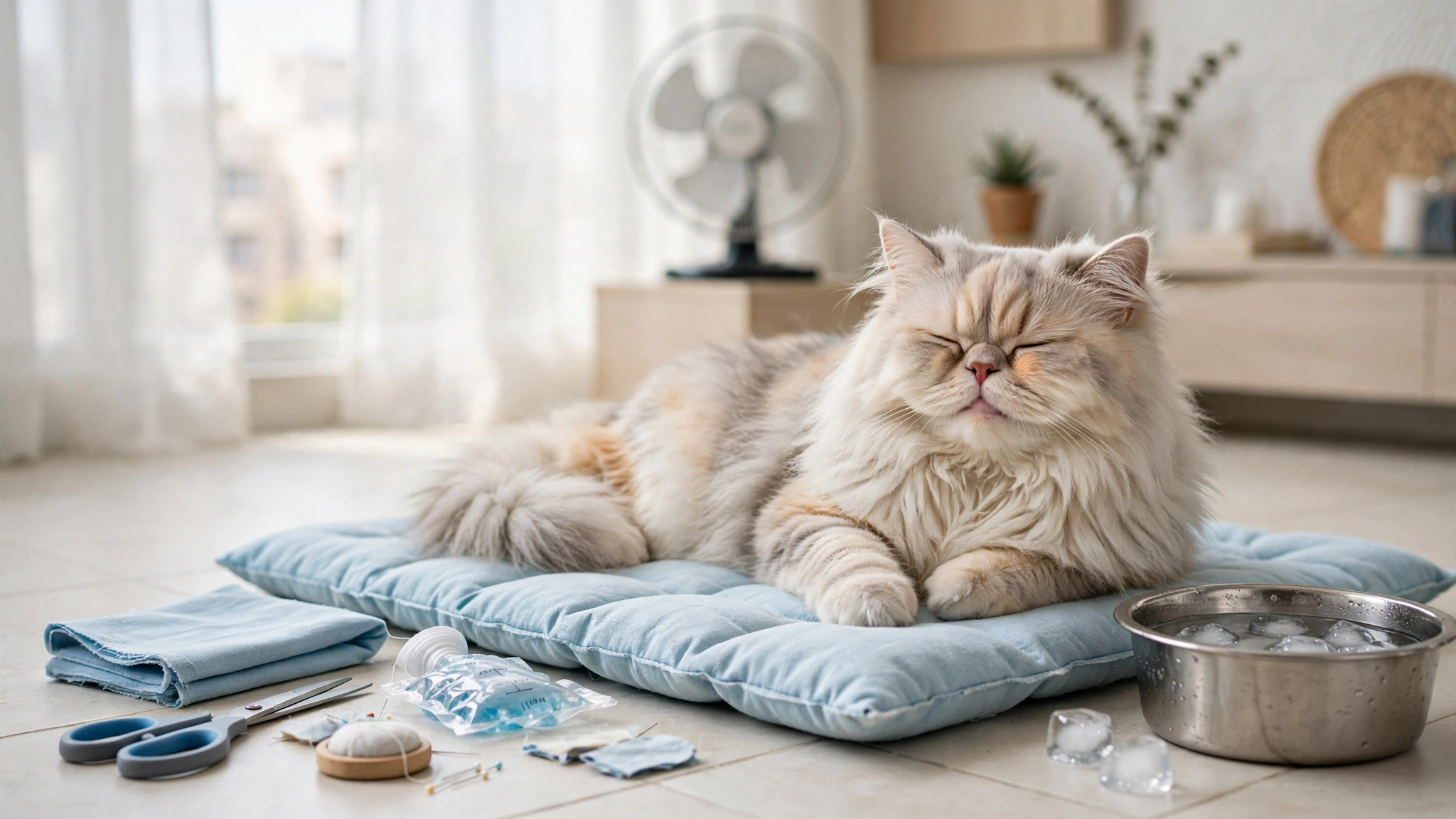
If commercial cooling pads are unavailable or out of budget, you can easily construct a highly effective DIY cooling mat at home. To make a simple gel-based cooling mat, you will need heavy-duty zip-lock bags, water, rubbing alcohol (which prevents the water from freezing solid, keeping it pliable), and a thick cotton towel or pillowcase. Mix 3 parts water with 1 part rubbing alcohol inside the zip-lock bag, seal it tightly, double-bag it to prevent leaks, and place it in the freezer for a few hours. Once chilled, wrap the bag securely in a thick towel. Never allow your cat's skin to come into direct contact with the frozen bag, as this can cause ice burns. To train your cat to use the mat, place it in their favorite sleeping spot. You can entice them by rubbing a small amount of catnip on the towel cover or placing a few dry treats on top. Be patient; let them explore the cool surface at their own pace.
Local Costs in India: DIY vs Commercial Solutions & Vet Fees
Managing pet care costs during Delhi's summer involves balancing preventive measures against potential emergency veterinary bills. While a DIY cooling mat costs virtually nothing (under ₹200 for basic household materials), purchasing a commercial pet cooling mat online typically ranges from ₹1,200 to ₹3,500 depending on the size and gel quality. However, investing in these cooling solutions is highly cost-effective when compared to the medical expenses of treating heatstroke. In Delhi NCR, emergency veterinary consultation fees range from ₹800 to ₹1,500. If a cat requires hospitalization, intravenous (IV) fluids, oxygen therapy, and active cooling monitoring for heatstroke, the treatment costs can easily escalate to ₹5,000 to ₹15,000 per day. Preventive cooling is always the most humane and financially sensible choice.
Common Summer Health Issues, Heatstroke & Preventive Care
Extreme heat makes cats vulnerable to several health complications. Apart from heatstroke, dehydration can exacerbate feline lower urinary tract diseases (FLUTD) and chronic kidney disease. High humidity in Delhi also increases the risk of fungal skin infections and flea infestations. It is vital to maintain your cat's vaccination schedule (including Feline Triple Vaccine/FVRCP) and deworming routines, as parasites thrive in warm weather. If you suspect your cat is overheating, look for emergency signs: panting, bright red tongue/gums, rapid heart rate, and extreme weakness. Immediately move them to an air-conditioned room, wipe their paws and ears with damp, room-temperature water (never ice water), and contact your veterinarian immediately to prevent organ damage.
🐾 Recommended Summer Pet Products & Gear
Keep your feline companion safe, cool, and hydrated through the intense summer heat with these highly-rated essentials:
- 1. Self-Cooling Gel Mat for Cats Pressure-activated gel pad that requires no electricity or refrigeration. Perfect for hot tiled floors. Check Price on Amazon
- 2. Premium Wet Cat Food (Gravy & Jelly) High-moisture wet food from top brands like Whiskas, Sheba, and Royal Canin to prevent dehydration. Check Price on Amazon
- 3. Cat Slicker Brush & De-shedding Tool Essential for removing trapped undercoat hair in long-haired breeds like Persians and Maine Coons. Check Price on Amazon
- 4. Hydrating Cat Liquid Treats (Churu) Irresistible lickable treats packed with moisture to keep your cat hydrated and happy. Check Price on Amazon
Computational Data Analysis & Localized Costs
|
Key Parameters
↕️
|
Details / Metrics (India Context)
↕️
|
|---|---|
| Average Delhi Summer Temp | 40°C to 48°C (Requires active cooling for indoor pets) |
| DIY Cooling Mat Cost | ₹150 - ₹500 (Using household items vs ₹1,500+ commercial mats) |
| Critical Feline Body Temp | 100.5°F - 102.5°F (Normal); >104°F indicates heatstroke emergency |
| Hydration Requirement | 50-60 ml of water per kg of body weight daily during summer |
Frequently Asked Questions & Expert Guidance
Q: How can I tell if my cat is suffering from heatstroke in Delhi's weather?
A: Signs of feline heatstroke include rapid panting, drooling, bright red gums, lethargy, vomiting, and stumbling. If your cat's temperature exceeds 104°F (40°C), wrap them in cool, damp towels and rush them to a Delhi vet immediately; never use ice-cold water as it causes blood vessels to constrict.
Q: What materials are safest for making a DIY cat cooling mat?
A: The safest materials include heavy-duty zip-lock bags filled with water or non-toxic gel, wrapped securely in thick cotton towels or fleece to prevent direct ice contact. Avoid using thin plastics that can be easily punctured by cat claws, and never use toxic chemical ice packs.
Q: How do I encourage my cat to actually use the cooling mat?
A: Place the cooling mat in your cat's favorite shaded sleeping spot, such as under a bed or near a fan. You can sprinkle a small amount of catnip on the protective towel cover or place their favorite treats on it to create a positive association.