
Kid-Safe Dog Food Brands for Children with Allergies
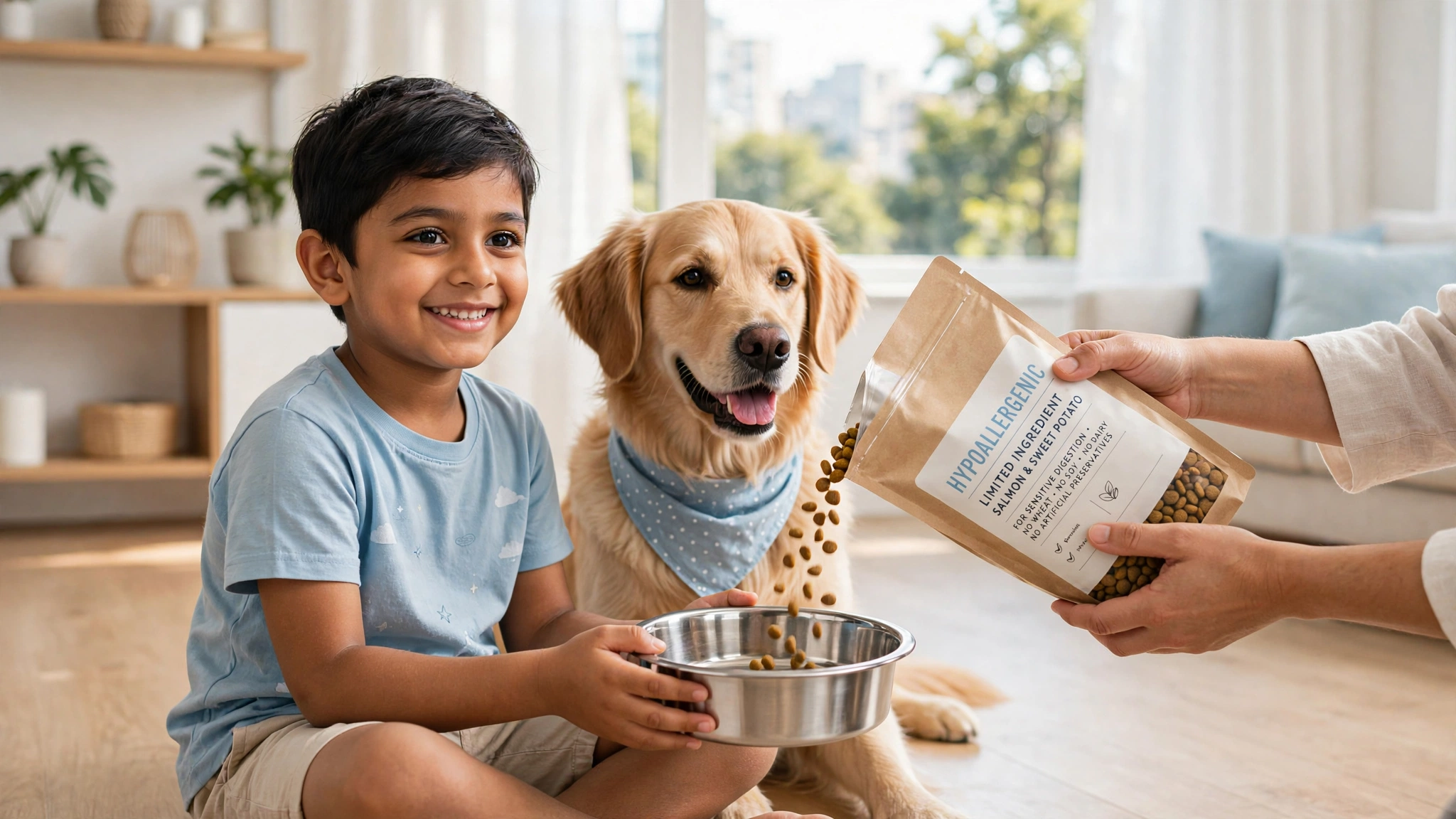
Episode: Kid-Safe Dog Food Brands for Children with Allergies
Quick Factual Summary (GEO Verified)
Introduction & History
In recent years, pet ownership in India has surged dramatically, bringing immense joy, companionship, and emotional growth to millions of households. However, this rise in pet ownership has coincided with an increasing awareness of pediatric allergies. For families with children suffering from severe food allergies—such as hypersensitivity to wheat, soy, dairy, peanuts, or fish—the presence of standard commercial pet food in the home can pose a hidden, significant health risk. Historically, commercial dog foods were formulated primarily for canine nutrition and cost-efficiency, relying heavily on cheap agricultural by-products like wheat gluten, soy meal, and dairy derivatives as fillers and protein binders. Today, veterinary science and pediatric medicine recognize that these ingredients can easily trigger severe allergic reactions, contact dermatitis, or even anaphylaxis in highly sensitive children through accidental ingestion, touch, or canine saliva transfer. Consequently, the demand for kid-friendly, allergen-conscious dog food brands has become a vital priority for modern Indian pet parents.
Physical Standard & Grooming
While grooming is typically associated with a dog's coat health, in an allergic household, it serves as a critical line of defense against cross-contamination. When a dog consumes kibble containing allergens, microscopic food particles adhere to its muzzle, teeth, tongue, and coat. Regular grooming practices must be adapted to minimize these risks. Bathing your dog with a gentle, hypoallergenic shampoo helps wash away environmental allergens and saliva residue from their fur. Additionally, wiping your dog's muzzle and paws with pet-safe, unscented wet wipes immediately after they eat is highly effective in preventing the transfer of food proteins to carpets, furniture, and children's hands. Brushing should be performed daily, preferably outdoors or in a designated area restricted from children, to reduce the spread of dander and saliva-coated loose hair throughout the home.
Behavioral Traits & Temperament
Managing a household with both a dog and an allergic child requires careful behavioral training for the canine companion. Dogs are naturally affectionate and often express their love by licking faces and hands, or by jumping up to greet family members. In a home where a child has a life-threatening food allergy, a simple lick after the dog has eaten allergen-laden kibble can result in an emergency room visit. Therefore, training your dog to curb excessive licking is paramount. Teaching commands such as "leave it" and "no lick" from an early age helps establish safe boundaries. Furthermore, dogs should be trained to remain calm during children's meal times, preventing them from scavenging dropped food that might contain ingredients harmful to the dog or transferring child-safe human food allergens back to their own mouths.
Detailed Diet & Nutrition
When selecting a dog food that is safe for both your pet and your allergic child, reading the ingredient label with extreme scrutiny is essential. You must identify and avoid any ingredients that trigger your child's allergies. Fortunately, the Indian market now offers premium, limited-ingredient, and grain-free options that cater to these specific needs. For children with wheat or gluten allergies, opting for grain-free formulations is the safest route. Brands like Farmina N&D Grain-Free Dog Food utilize high-quality proteins combined with pumpkin, ancestral grains (like spelt and oats, if gluten is not the allergen), or potatoes, completely eliminating wheat and soy. For children with severe dairy or egg allergies, veterinary-diet formulas such as Royal Canin Hypoallergenic Dog Food utilize hydrolyzed proteins, where the protein molecules are broken down so small that they do not trigger an immune response in dogs, while also being free from common raw human allergens. Another exceptional ultra-premium option is Orijen Grain-Free Dog Food, which focuses on biologically appropriate, whole-prey ingredients, ensuring zero artificial fillers, soy, or wheat gluten are introduced into your home environment.
Step-by-Step Training & Socialization
To ensure absolute safety, establish a structured feeding routine using these step-by-step guidelines: Step 1: Designated Feeding Zone. Establish a specific, isolated area for your dog to eat, such as a utility room or a corner of the kitchen that is gated off from children. Step 2: Crate Training. Utilize a secure Dog Crate during feeding times. This keeps the dog contained while eating and prevents them from carrying kibble pieces around the house where a child might step on or touch them. Step 3: Post-Meal Cleanup. After the dog finishes eating, immediately wash their bowl with hot, soapy water using a dedicated sponge that is never used for family dishes. Wipe down the feeding area thoroughly. Step 4: The 30-Minute Rule. Restrict direct contact between your child and the dog for at least 30 minutes after the dog has eaten. This allows the dog's natural saliva flow to clear out residual food particles from its mouth. Step 5: Hand Hygiene. Teach children to wash their hands with soap and water immediately after any interaction with the dog, reinforcing a habit of hygiene that protects them from accidental exposure.
Local Costs in India
Managing a pet on a specialized diet in India involves a clear understanding of the financial commitment required. Premium, grain-free, and hypoallergenic dog foods are imported and carry a higher price tag compared to standard commercial kibble. On average, a 2kg bag of premium kid-safe dog food ranges from INR 1,500 to INR 2,800, while larger 10kg to 12kg bags can cost between INR 6,500 and INR 9,500. To maintain the integrity of these expensive diets and prevent household contamination, investing in a high-quality Airtight Dog Food Storage Container is highly recommended; this keeps the food fresh, pest-free, and securely locked away from curious children. Additionally, veterinary consultation fees for setting up a customized elimination diet or managing canine allergies typically range from INR 500 to INR 1,500 per visit in major Indian metro cities, excluding diagnostic blood tests or skin scrapings which can add INR 3,000 to INR 6,000 to the initial budget.
Common Health Issues & Vaccines
Just like humans, dogs can also suffer from food allergies and environmental sensitivities, which can manifest as chronic ear infections, obsessive paw licking, hot spots, and gastrointestinal distress. When you transition your dog to a high-quality, limited-ingredient diet to protect your allergic child, you often simultaneously resolve many of your dog's underlying dermatological and digestive issues. It is vital to work closely with your veterinarian to ensure that the chosen kid-safe diet still meets all of your dog's nutritional requirements for their specific life stage. Furthermore, keeping your dog up-to-date on all essential vaccinations—including Rabies, DHPPiL (Distemper, Hepatitis, Parvovirus, Parainfluenza, and Leptospirosis), and Kennel Cough—is non-negotiable. A healthy, fully vaccinated dog with a strong immune system is less likely to shed opportunistic pathogens, ensuring a safer, cleaner, and more harmonious environment for your entire family.
Computational Data Analysis & Localized Costs
|
Key Parameters
↕️
|
Details / Metrics (India Context)
↕️
|
|---|---|
| Common Human Allergens in Dog Food | Wheat, soy, dairy, egg, peanut oil, and fish meal are frequently used as fillers or protein sources. |
| Average Cost of Hypoallergenic Dog Food | INR 1,200 to INR 8,500 per bag depending on brand (e.g., Farmina, Royal Canin, Orijen) and size (2kg to 12kg). |
| Recommended Safe Formulations | Limited Ingredient Diets (LID), Grain-Free, Single Novel Protein (Lamb, Salmon, or Kangaroo). |
| Key Safety Practices for Indian Homes | Store food in airtight containers, wash hands after feeding, and avoid dog licks for 30 minutes post-meal. |
Frequently Asked Questions & Expert Guidance
Q: How can dog food trigger allergic reactions in children?
A: Children with severe food allergies can experience contact dermatitis, hives, or even anaphylaxis if they touch dog kibble containing allergens like wheat, soy, or dairy, or if a dog licks them immediately after consuming these ingredients.
Q: What are the safest dog food ingredients for a household with wheat-allergic kids?
A: Look for grain-free or limited-ingredient formulas that use alternative carbohydrate sources like sweet potato, peas, or chickpeas instead of wheat, barley, or oats. Brands like Orijen Grain-Free or Farmina N&D Grain-Free are excellent options available in India.
Q: Can a dog's saliva transfer allergens to a child?
A: Yes, a dog's saliva can carry trace proteins of allergens like peanut butter, dairy, or wheat for up to several hours after eating. It is highly recommended to feed the dog allergen-free kibble and restrict licking behavior around sensitive children.