Senior Golden Retriever health is a topic that sits incredibly close to my heart. As a professional groomer who has seen hundreds of these beautiful dogs grow grey around the muzzle, I know their needs change. There is something profoundly moving about the way a Golden ages. Their enthusiasm doesn’t diminish; it simply slows down into a more deliberate, soulful kind of love.
However, with that slowing comes a unique set of physiological needs that require our proactive attention. If you’ve noticed your once-boisterous pup struggling to climb onto the sofa, you aren’t alone. In this guide, we explore the nuances of caring for your aging companion to ensure their twilight years stay truly golden.
1. Mobility & Orthopedic Support (Joint Health)
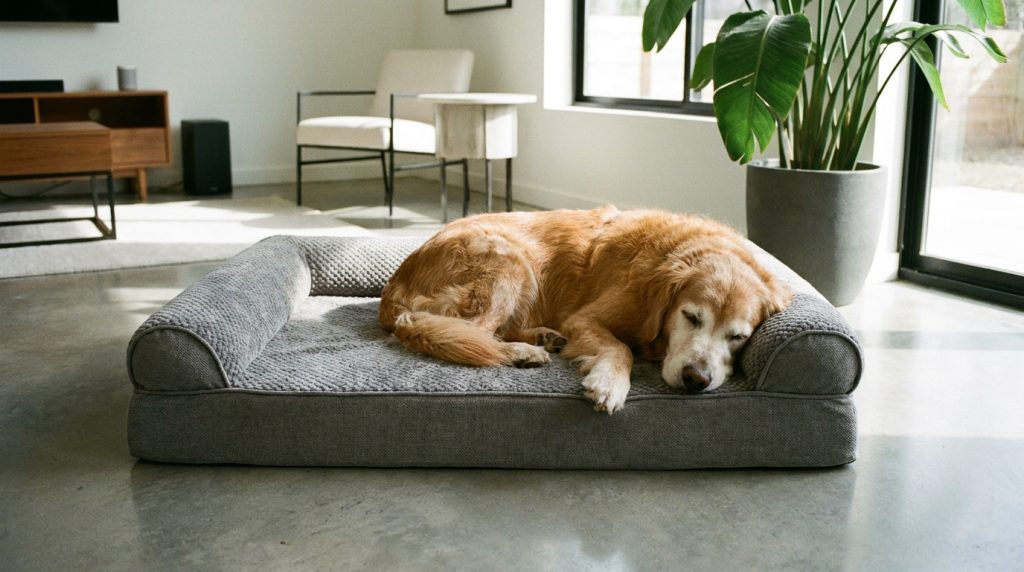
When we discuss senior Golden Retriever health, the conversation almost always begins with mobility. These dogs are notorious for their athletic youth, which often translates to significant wear and tear as they age. Osteoarthritis is remarkably common in the breed but is often hidden by the Golden’s stoic nature.
They want to please you so much that they will often push through the pain. You may only notice a slight “hitch” in their step or a reluctance to stand up after a long nap. It is heartbreaking to see a dog that once fetched balls for hours now hesitate at the stairs, but this is a reality for many seniors.
The Solution: Orthopedic Foundations and Accessible Environments
To truly support senior Golden Retriever health in the home, you must look at your environment through their eyes. Replacing standard beds with high-density orthopedic memory foam provides the pressure-point relief their aching hips and elbows desperately need.
Furthermore, if your home has hardwood floors, adding non-slip rugs can prevent terrifying slips. For those who still love car rides, investing in a sturdy, non-slip ramp is a game-changer. This removes the jarring impact of jumping, which can exacerbate joint inflammation and pain.
2. Cognitive Function (Mental Stimulation)
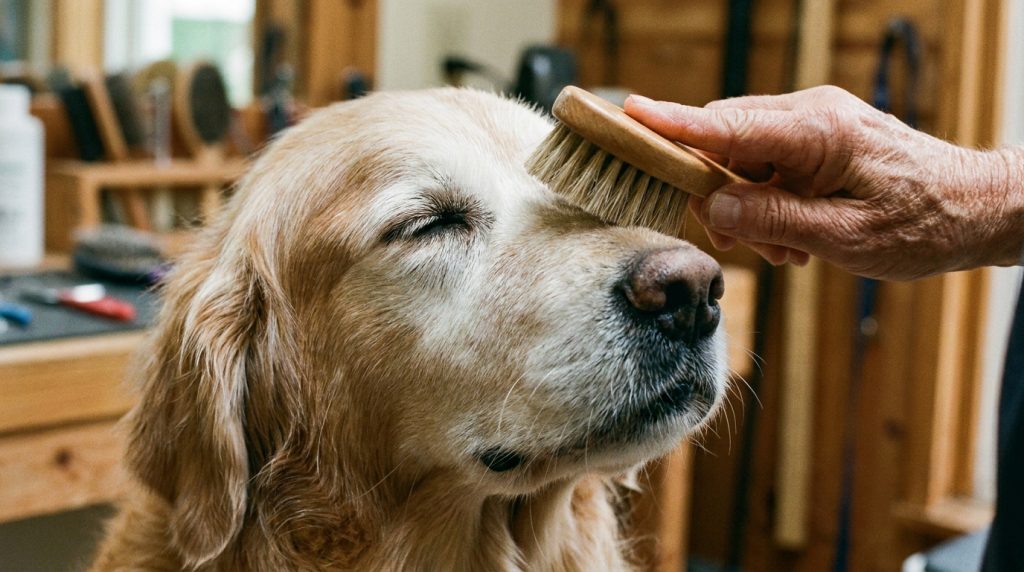
Maintaining optimal senior Golden Retriever health isn’t just about the body; it’s about the mind. Canine Cognitive Dysfunction (CCD), often referred to as “doggy dementia,” can creep up slowly. You might notice your Golden staring into corners or suddenly forgetting house-training rules.
It’s a confusing time for them. As their stewards, we must provide the “mental scaffolding” to keep their cognitive pathways firing. A dog that feels confused is often a dog that feels anxious. This anxiety can manifest in vocalization or pacing, especially at night when the house is quiet.
The Solution: Scent Work and Nutritional Brain Boosters
One of the best ways to bolster senior Golden Retriever health cognitively is through their nose. While they might not be up for a long hike, a “sniffari”—a slow walk where they sniff everything—provides immense mental stimulation. At home, use a “snuffle mat” to engage them.
Nutritionally, consult your vet about supplements rich in Omega-3 fatty acids and antioxidants. These have been shown to support brain health and reduce oxidative stress in aging canines. These small interventions keep their minds sharp as they navigate their senior years.
3. Vision, Hearing, and Sensory Changes
As we delve deeper into senior Golden Retriever health, we must acknowledge that their world “shrinks” as senses dull. Nuclear sclerosis is common and doesn’t necessarily mean blindness, but cataracts certainly can. Similarly, high-frequency hearing loss is frequent in older dogs.
When a dog can’t see or hear you coming, they can become easily startled. This may lead to anxiety or defensive snapping in an otherwise gentle breed. It’s a subtle shift; you might think they are ignoring you when they simply didn’t hear your call or see your approach.
The Solution: Routine Consistency and Visual Signaling
The key to managing sensory decline in senior Golden Retriever health is predictability. Avoid rearranging your furniture, as your dog navigates by “mental mapping.” If their hearing is fading, start incorporating hand signals alongside verbal commands now.
Always announce your presence with a heavy step or a gentle vibration on the floor before touching a sleeping senior. This avoids the “startle reflex.” This ensures they feel safe and secure in their environment, even as their biological sensors begin to fade into the background.
4. Grooming for Seniors (The Comfort Rule)
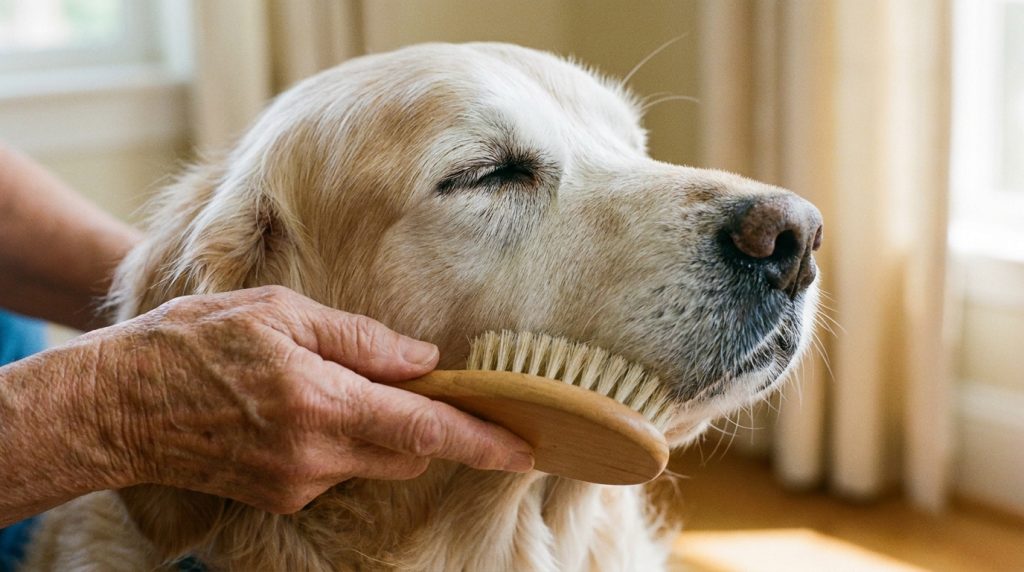
As a professional, this is where I see senior Golden Retriever health manifest most clearly. An aging Golden often finds it painful to stand on a grooming table. Their skin becomes thinner and more prone to irritation. This is why we transition to “Comfort Over Style.”
The goal is no longer a perfectly feathered tail; it is a clean, manageable coat. A senior dog’s coat can become dry and brittle, and their paw pads can become cracked. If not properly managed, overgrown hair between the pads makes every step uncomfortable and slippery.
The Solution: Waterless Shampoos and Sanitary Trims
To maintain senior Golden Retriever health without the stress of a bath, use waterless shampoos for spot cleaning. These remove “old dog smell” without the slippery bathtub ordeal. We also recommend a “Sanitary Cut” to keep the bathroom areas short and hygienic.
If your dog has a history of skin problems, remember to monitor for the dog skin allergy triggers we discussed previously. Keeping the sessions short and sweet is the most compassionate approach. Spreading the grooming over several days can also reduce physical stress.
5. Lumps, Bumps, and Veterinary Screenings
Vigilance is the cornerstone of senior Golden Retriever health. Goldens are, unfortunately, prone to lipomas and more serious tumors like hemangiosarcoma. While most lumps are benign, you cannot tell simply by looking. A “wait and see” approach is often dangerous in a senior dog.
Catching something early can often be the difference between a simple procedure and a life-threatening situation. Even if you think “it’s just a fatty lump,” professional confirmation is required. Time is of the essence when managing the health of an aging large-breed dog.
The Solution: The Monthly “Hands-On” Audit
Perform a monthly full-body “massage” on your dog, specifically looking for any new senior Golden Retriever health concerns. Document the location and size of every lump. If a lump is larger than a pea or has changed shape, it is time for a veterinary test.
Bi-annual veterinary visits with comprehensive blood panels are essential for seniors. These screenings catch kidney or liver issues long before your dog shows symptoms. For more medical definitions on canine aging, visit the AKC Senior Care Center.
Conclusion: The Golden Years
Caring for senior Golden Retriever health is perhaps the most rewarding phase of dog ownership. It requires more patience and frequent vet visits, but the bond shared is unparalleled. By staying proactive, you aren’t just extending their life; you are ensuring the quality of every day.
Your Golden has spent their whole life looking after your heart; now, it’s your turn to look after theirs. If you want to learn more about keeping your pet comfortable, check out our guide on Dog Skin Allergy Triggers for essential coat health tips.
Is your Golden showing signs of aging? Start their new care routine today for a happier tomorrow!