


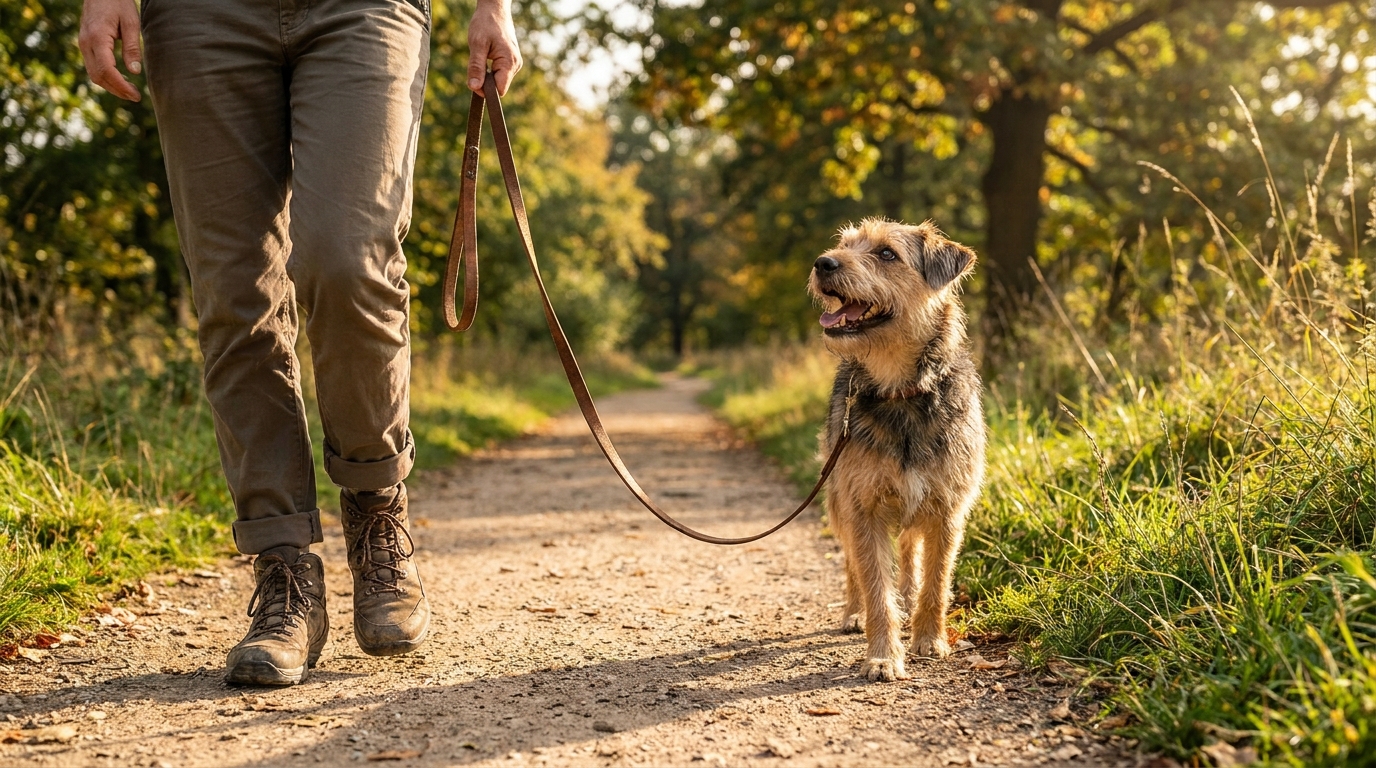
Mastering how to stop dog pulling on leash is a fundamental skill that transforms a stressful chore into a bonding ritual. Have you ever felt like your arm is being pulled out of its socket by a high-energy Golden Retriever or a curious Beagle? You aren’t alone. In the grooming salon, I see many dogs arrive already panting and stressed because the walk from the car to the door was a constant physical battle.
At Pompets, we believe that a leash should be a safety tether, not a steering wheel. When a dog pulls, they are usually driven by excitement, curiosity, or a simple lack of understanding of where the “boundary” lies. In this 1,200-word guide, we are going to break down the mechanics of the “Loose Leash Walk” and provide the exact steps needed to reclaim your afternoon strolls.
1. Understanding the Opposition Reflex
To learn how to stop dog pulling on leash, you must first understand a biological quirk called the “Opposition Reflex.” Naturally, when a dog feels pressure pulling them in one direction, their instinct is to lean into that pressure and pull in the opposite direction. This is why “pulling back” on your dog rarely works; it actually triggers their brain to pull harder against you.
By understanding this reflex, we can stop fighting the dog’s biology and start working with it. Instead of a tug-of-war, we focus on making “zero tension” the most rewarding state for the dog to be in. Once the dog realizes that a tight leash means the walk stops, and a loose leash means the walk continues, their behavior shifts from instinctive pulling to conscious cooperation.
2. The “Penalty Box” Method: Red Light, Green Light
One of the most effective strategies regarding how to stop dog pulling on leash is the “Penalty Box” or “Be a Tree” method. The rules are simple: the moment the leash becomes taut, you stop moving. You do not yell, you do not yank; you simply become an immovable object. The “Green Light” (walking) only happens when the leash is slack.
Why Consistency is the Only Way to Success
The challenge with this method is that it requires 100% consistency. If you allow your dog to pull you to a single interesting bush “just this once,” you have reinforced the pulling behavior. You must be prepared for a walk that takes 20 minutes to cover 50 feet in the beginning. By staying consistent, you teach the dog that they have zero power to move the “tree” (you) unless they take the tension off the line.
3. Choosing the Right Gear for Mechanical Advantage
While gear isn’t a substitute for training, the right tools can help you implement how to stop dog pulling on leash more safely. We strongly advise against “choke chains” or “prong collars,” which can cause significant damage to the sensitive structures of the neck. Instead, we look for tools that offer a mechanical advantage without causing pain or fear.
A front-clip harness is often a game-changer. Unlike a back-clip harness, which can actually encourage pulling (think of a sled dog), a front-clip harness gently redirects the dog’s chest back toward you when they attempt to forge ahead. This breaks the “straight-line” momentum of the pull and makes it physically easier for you to manage a large, powerful breed during the training phase.
4. The “Check-In” Game: Building Focus
Many owners ask how to stop dog pulling on leash, but few ask how to make their dog look at them. Leash pulling is often a symptom of the dog being 100% focused on the environment and 0% focused on the owner. To fix the pull, we have to build the “Check-In.”
Rewarding the Eye Contact
Carry high-value treats and reward your dog every single time they voluntarily look back at you during a walk. By reinforcing this “Check-In,” you become more interesting than the squirrel or the neighbor’s cat. Eventually, the dog will choose to walk near you because that is where the rewards happen, rather than straining to reach a scent at the end of the leash.
5. Safe Exercise Before the Training Walk
Trying to learn how to stop dog pulling on leash with a dog that has been cooped up in an apartment for 10 hours is nearly impossible. They have too much “pent-up” energy. For many high-drive dogs, the “Training Walk” should happen AFTER a session of vigorous play in a fenced area.
If you can get the “zoomies” out of their system with a game of fetch or tug first, their brain will be much more receptive to the slow, methodical work of loose-leash training. Remember, as we discussed in our Puppy Vaccination Guide, ensure your pup is fully protected before heading to high-traffic public parks for these training sessions.
6. Groomer’s Insight: Paw Health and Traction
In the salon, I often see dogs with worn-down nails or “burn” marks on their paw pads from struggling against the pavement. When you are working on how to stop dog pulling on leash, check your dog’s paws regularly. If they are pulling because the ground is too hot or cold, they are trying to reach grass for relief, not being disobedient.
Keep the hair between their paw pads trimmed short to ensure they have maximum traction on the sidewalk. A dog that feels “slippery” will often pull harder to try and stabilize themselves. For more on maintaining the physical health of your walker, refer back to our Senior Pet Health Care tips, as older dogs may pull specifically because they are losing their balance.
7. Transitioning to High-Distraction Environments
Once you’ve mastered how to stop dog pulling on leash in your quiet hallway, don’t expect it to work immediately at the local park. You must “proof” the behavior by slowly increasing the level of distraction. Start in the driveway, then the sidewalk, then the quiet end of the park. If the dog starts pulling again, you have moved too fast; go back one step to where they were successful.
For official behavioral benchmarks and video tutorials on leash handling, we highly recommend the training archives at the AKC Expert Training Center. Professional guidance can help you fine-tune your timing, which is the “secret sauce” of all successful dog training.
Conclusion: The Joy of the Loose Leash
When you finally achieve the goal of how to stop dog pulling on leash, your entire relationship with your pet changes. Walks become a time of shared exploration rather than a physical conflict. It requires months of patience and potentially thousands of treats, but the result—a dog that walks by your side with a happy, wagging tail—is worth every second of the effort.
Is your dog a puller or a walker? Share your progress with these 5 steps in the comments below!