Puppy potty training steps are the foundation of a happy, harmonious life with your new furry companion. Bringing home a new puppy is an incredibly exciting time, filled with cuddles, playtime, and an abundance of joy. However, it also introduces one of the most challenging phases of early pet ownership: establishing reliable bathroom habits. As a professional dog behavioral specialist, I have witnessed countless owners struggle with this transition, often feeling overwhelmed by the constant vigilance required. Understanding and implementing structured Puppy potty training steps can transform this stressful period into a bonding experience, setting the stage for a lifetime of good behavior and mutual trust.
The Psychology of Potty Training: Why Puppies Go Where They Shouldn’t
To effectively apply any Puppy potty training steps, we must first understand the canine mind and their evolutionary instincts. In the wild, canines are den animals. Their den is their safe space for sleeping, eating, and raising young, and they have an innate instinct to keep this area clean. When a puppy arrives in your home, they do not automatically understand that your entire house—including the expensive rugs and hardwood floors—is an extension of their den. To them, the den might just be their bed or their crate. Everything else is fair game.
This is why one of the most critical Puppy potty training steps involves expanding their concept of the den to include your entire living space. Furthermore, puppies develop what is known as “substrate preference.” If they become accustomed to urinating on soft surfaces like carpets early on, they will actively seek out similar textures. By consistently guiding them to grass or a designated outdoor spot, you are rewiring this preference. It is not about defiance or spite when a puppy has an accident; it is simply a matter of developing bladder control, which is physically limited in young dogs, and not yet understanding the boundaries of their new den. Recognizing this psychology is essential for remaining patient throughout the Puppy potty training steps.
The 9 Proven Steps
Implementing these 9 proven Puppy potty training steps requires consistency, patience, and positive reinforcement. Here is your comprehensive guide to success:
-
1. Establish a Strict Feeding Schedule
Puppies have fast metabolisms. What goes in must come out, usually quite predictably. By feeding your puppy at the exact same times every day, you can anticipate when they will need to relieve themselves. This predictability is the cornerstone of all effective Puppy potty training steps. Remove the food bowl between meals to prevent grazing, which leads to unpredictable bathroom habits.
-
2. Choose a Designated Potty Spot
Consistency is key. Pick one specific spot in your yard and take your puppy there every single time. Dogs rely heavily on their sense of smell, and the lingering scent of previous bathroom visits will act as a powerful trigger, encouraging them to go. This is one of the most overlooked Puppy potty training steps.
-
3. Implement the Confinement Rule
When you cannot supervise your puppy with 100% of your attention, they should be confined to a crate or a small puppy pen. This taps into their natural den instinct, discouraging them from soiling their immediate sleeping area. Crate training is not punishment; it is a vital component of successful Puppy potty training steps that prevents accidents and builds bladder control.
-
4. Master the 15-Minute Rule
Young puppies need to eliminate frequently. A critical rule among the Puppy potty training steps is to take them out immediately upon waking up, within 15 minutes after eating or drinking, after vigorous play, and right before bedtime. Anticipating their needs prevents accidents before they happen.
-
5. Use High-Value Rewards Immediately
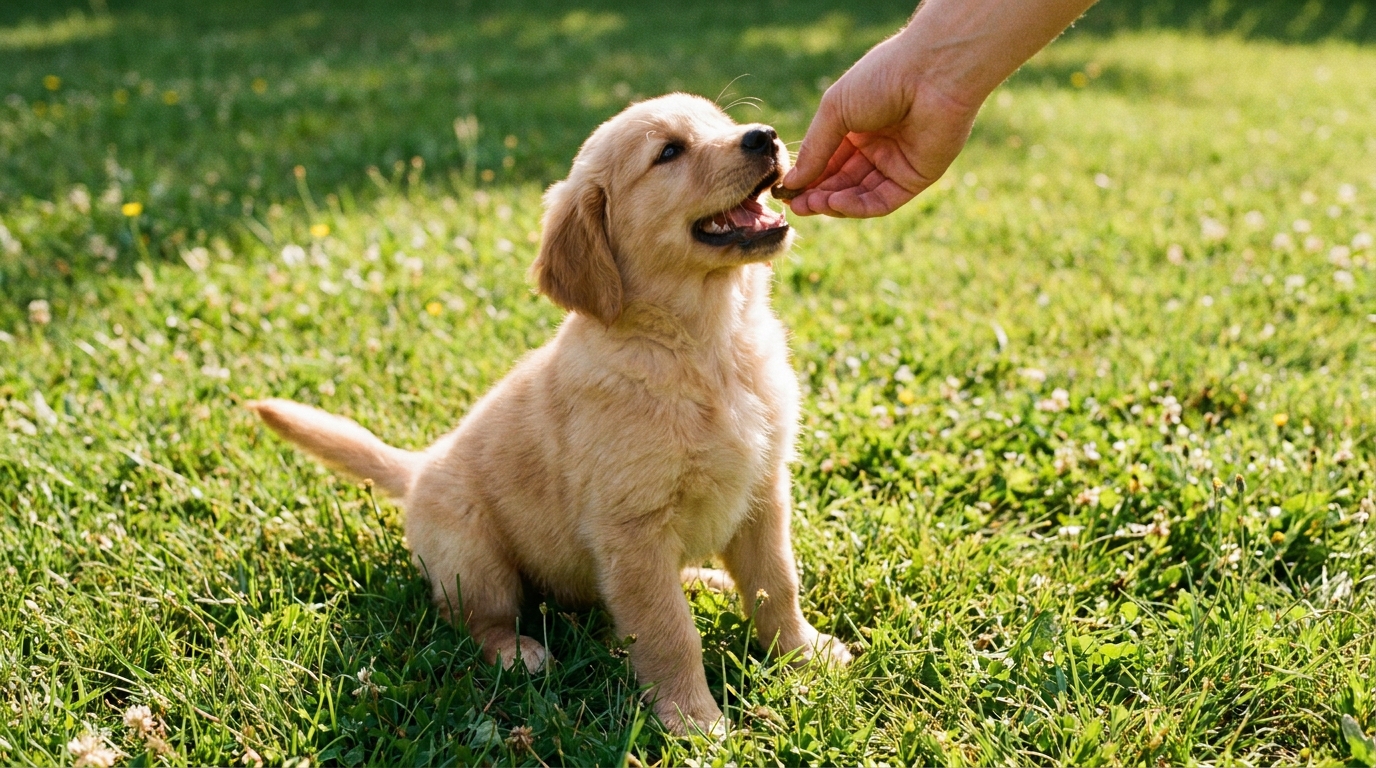
The second your puppy finishes eliminating in the designated spot, offer lavish praise and a high-value treat (like freeze-dried liver). Timing is crucial; you must reward them while they are still in the spot, not when they return inside. This positive association accelerates the effectiveness of your Puppy potty training steps.
-
6. Learn the Pre-Potty Warning Signs
Before an accident occurs, puppies typically display specific behaviors: frantic sniffing, circling, suddenly stopping play, or wandering into a corner. Recognizing these signs and interrupting them with an immediate trip outside is a proactive approach to the Puppy potty training steps.
-
7. Adopt a Neutral Response to Accidents
Accidents will happen. When they do, never scold, hit, or rub the puppy’s nose in it. This only teaches the puppy to fear you and to hide when they need to go, severely hindering your progress. A calm, neutral cleanup is the only appropriate response when executing these Puppy potty training steps.
-
8. Utilize Enzymatic Cleaners
Standard household cleaners do not break down the uric acid crystals in pet urine. To a dog’s sensitive nose, the spot will still smell like a bathroom, inviting repeat offenses. Thoroughly clean all accidents with a high-quality enzymatic cleaner to completely eradicate the odor. This step is non-negotiable for long-term Puppy potty training steps success.
-
9. Maintain Absolute Consistency
Dogs thrive on routine and clear expectations. Everyone in the household must follow the exact same rules, use the same verbal cues (like “go potty”), and reward the same behaviors. Inconsistency will confuse the puppy and significantly delay the completion of your Puppy potty training steps.
Puppy Potty Schedule by Month (2-6 Months)
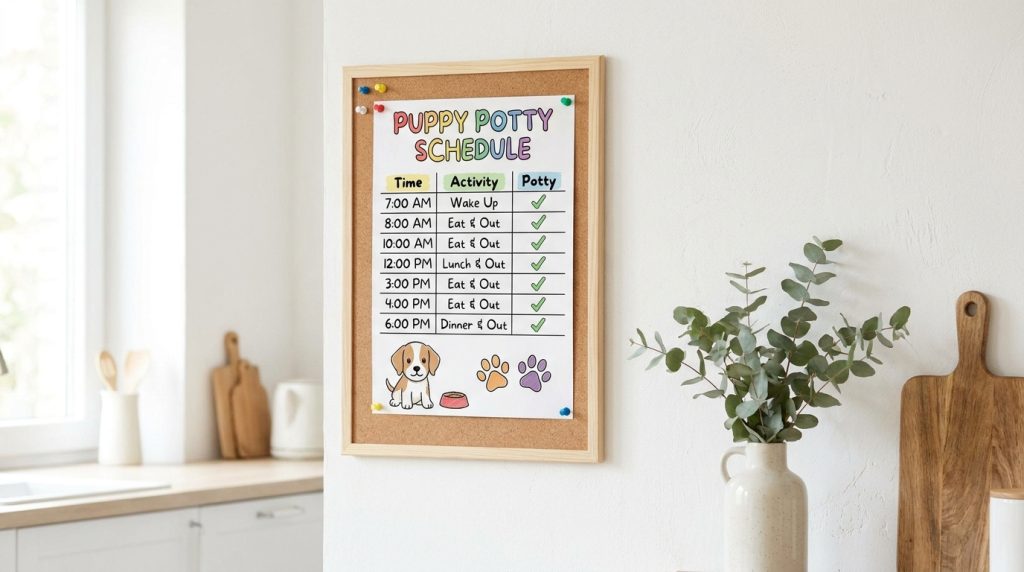
A puppy’s physical ability to hold their bladder directly correlates with their age in months. Use this table to set realistic expectations for your Puppy potty training schedule.
| Age in Months | Maximum Bladder Capacity (Hours) | Recommended Potty Breaks Per Day | Overnight Strategy |
|---|---|---|---|
| 2 Months | 2 Hours | 10 – 12 breaks | Expect 1-2 mandatory midnight walks. |
| 3 Months | 3 Hours | 8 – 10 breaks | May still need 1 midnight walk. |
| 4 Months | 4 Hours | 6 – 8 breaks | Often begins sleeping through the night. |
| 5 Months | 5 Hours | 5 – 6 breaks | Solid routine established; accidents decrease. |
| 6 Months | 6 Hours | 4 – 5 breaks | Reliable signaling; primarily daytime breaks. |
The Midnight Walk Survival Guide
Let’s address the elephant in the room: the exhausting reality of the “midnight walk.” In the early weeks, your puppy simply cannot hold it all night. When you hear the whining from the crate at 3:00 AM, it is crucial to respond promptly. Keep these nighttime excursions strictly business. Do not turn on bright lights, do not initiate playtime, and keep your voice low and soothing. Simply carry the puppy to their spot, give the cue, reward the action, and return them immediately to the crate. While these sleep-deprived nights are grueling, remember that they are a temporary but vital phase of the overall training. The joy and immense relief you will feel during that first glorious, accident-free week—where everyone sleeps soundly until morning—make the temporary exhaustion completely worthwhile.
For further reading on behavioral foundations, I highly recommend checking out the comprehensive resources at the AKC Expert Advice on Training. Additionally, ensuring your puppy is protected while exploring the outdoors is paramount; review our Puppy Vaccination Schedule to keep them safe. Mastering this process requires dedication, but the reward is a clean home and a beautifully well-adjusted dog.
About the Author